
I spent forty-five minutes last Tuesday watching a guy at the corner table struggle with a laptop, a tangled mess of chargers, and a mounting sense of panic every time the barista yelled a name. He was searching for a “productivity hack” on his phone, completely oblivious to the fact that his setup was a logistical nightmare. Most people treat a change of scenery like a vacation, but if you don’t have a defined protocol, you aren’t working; you’re just paying five dollars for a latte to watch people walk by. If you want to learn how to work from a cafe properly, you need to stop looking for the perfect app and start looking at your physical constraints.
I’m not here to tell you which artisanal roast has the best notes of blueberry. I’m here to give you a standard operating procedure for remote work in high-friction environments. We are going to strip away the fluff and focus on the actual mechanics: equipment checklists, power management, and most importantly, the pre-arrival workflow that ensures you actually finish your tasks instead of just rearranging your desktop icons.
Table of Contents
Mapping Your Workflow Before You Order Your Coffee

Most people treat a cafe like a playground for their laptop. They wander in, hunt for an outlet like a scavenger, and hope the vibe carries them through three hours of deep work. That is a recipe for wasted overhead. Before you even sit down, you need to know exactly what you are there to accomplish. Are you drafting a high-level strategy or just clearing out a backlog of low-stakes emails? If you don’t define the task, you’ll spend forty minutes fighting distractions in public spaces instead of actually producing value.
I don’t care how expensive your laptop is; it won’t compensate for a lack of structure. I map my output in fifteen-minute increments on a physical notepad before I even look for a table. This forces me to commit to a sequence. If I know I need a stable connection for a video call, I don’t waste time scouting for the “aesthetic” corner; I head straight for the area with the most reliable signal. Most of these remote work productivity tips fail because people try to use software to manage chaos they haven’t even organized on paper yet. Stop looking for the perfect atmosphere and start defining your output requirements first.
The Best Gear for Mobile Working Success
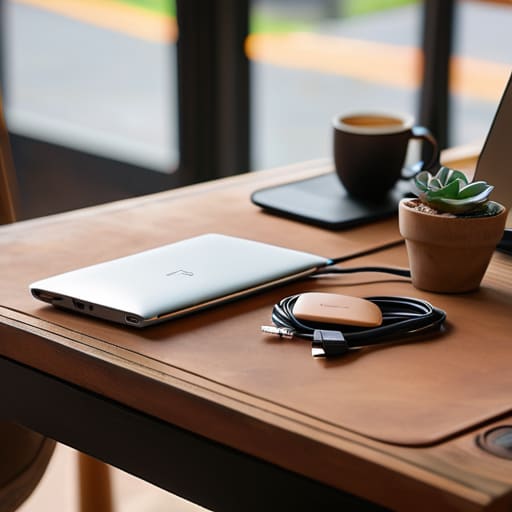
Stop treating your backpack like a junk drawer. If you’re serious about best gear for mobile working, you need to view your kit as a portable workstation, not a collection of loose cables. I don’t care how many “productivity hacks” you’ve read; if you spend twenty minutes untangling a knot of USB-C cords, you’ve already lost the morning. Invest in a high-quality, slim organizer and a dedicated power bank. Relying on a cafe’s outlet is a fool’s errand—half of them are broken, and the other half are buried behind heavy furniture.
Noise is the primary killer of focus. You cannot expect a high-end espresso machine and three teenagers to respect your deep-work window. I carry active noise-canceling headphones as a non-negotiable part of my kit; they are my primary tool for managing distractions in public spaces. If you aren’t prepared to create a sonic barrier between yourself and the environment, you aren’t working—you’re just sitting in a room with a laptop. Finally, get a portable laptop stand. If you’re hunching over a table like a gargoyle, your ergonomics will fail long before your deadline does.
Five Rules to Stop Wasting Time and Money
- Choose your station based on the task, not the vibe. If you need deep focus, find a corner with a wall behind you. If you’re just clearing emails, a high table is fine. Don’t sit in the middle of a high-traffic zone and wonder why your concentration is shot.
- Establish a clear exit trigger. I don’t stay until the baristas start mopping. Set a hard stop time before you sit down. If you don’t define the end of the session, you’ll drift into unproductive “busy work” just because you’re already there.
- Manage your digital footprint. Use a privacy screen. If you’re handling client data on public Wi-Fi without a VPN, you aren’t working; you’re performing a security breach in real-time.
- The “One-Order” Rule. Buy your coffee, buy your sandwich, then stay out of the queue. Interrupting your flow every twenty minutes to check on a muffin is a process failure. If you need more, wait until your scheduled break.
- Audit your output. At the end of the session, look at what you actually accomplished versus the time spent. If you spent two hours at a cafe and only answered three emails, you didn’t “work from a cafe”—you just paid for expensive caffeine and a change of scenery.
The Bottom Line
Stop treating a cafe like a home office; if you haven’t mapped the workflow on paper first, you’re just paying for expensive coffee to watch a progress bar move.
Gear is a capital expenditure, not a magic wand. If your hardware is top-tier but your process is broken, you’ve just wasted a significant amount of money on a faster way to fail.
Minimize the friction between your physical environment and your task list. If the setup takes longer than the actual work, you’ve failed the efficiency test.
The Bottom Line
Working from a cafe isn’t a vacation; it’s a mobile operation. If you haven’t mapped your workflow on paper before you sit down, you’ve already lost the battle to distraction. You need the right gear to minimize friction, but gear is just hardware. Without a defined process for managing your connectivity, your battery life, and your physical workspace, you are just paying ten dollars for a latte to sit in a chair and waste billable hours. Stop treating your mobile setup like a hobby and start treating it like the logistical challenge it actually is.
At the end of the day, the environment is secondary to the discipline you bring to the table. A cafe can be a high-output hub or a high-cost distraction depending entirely on your internal protocols. Don’t let the ambient noise or the lack of a dedicated desk become an excuse for inefficiency. If you control the process, you control the output. Now, stop reading this, go find a table, and get to work.

