
I spent forty-five minutes this morning watching a mid-sized logistics manager try to justify a $12,000 annual subscription for “AI-driven employee engagement analytics.” He wasn’t looking for results; he was looking for a way to avoid a difficult conversation about his own lack of clear workflows. Most people think the answer to remote work is more surveillance, but if you’re searching for how to measure remote productivity honestly, you need to stop looking at keystrokes and start looking at outputs. Software doesn’t create productivity; it just digitizes your existing chaos.
I’m not here to sell you a dashboard or a shiny new SaaS platform that promises to “unlock human potential.” My promise is much simpler: I am going to show you how to strip away the vanity metrics and focus on the only thing that actually matters—the documented process. We are going to talk about defining clear deliverables, setting measurable milestones, and building a culture where results speak louder than green status icons on a chat app. No fluff, no hype, just the operational reality.
Table of Contents
The Fatal Flaw of Activity Tracking vs Output Based Management
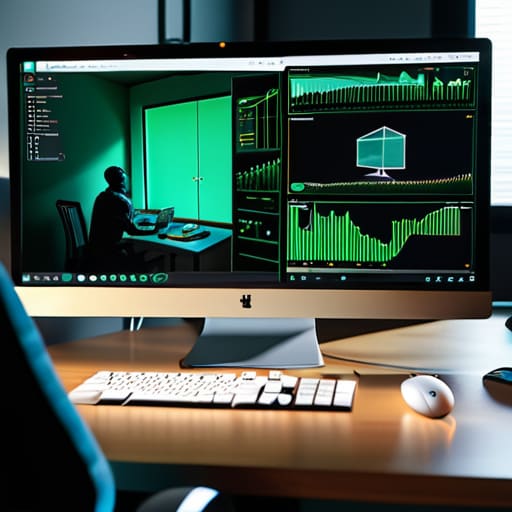
I see it every week: a manager spends three grand on a software suite that tracks mouse movements and keystroke frequency, thinking they’ve solved the visibility problem. They haven’t. They’ve just automated their own paranoia. This is the core tension of output-based management vs activity tracking. When you focus on “activity,” you are measuring how busy someone looks, not what they actually delivered. A developer might spend four hours staring at a wall, but if that wall-staring leads to a clean piece of code, the company wins. If they spend eight hours typing nonsense just to keep a green light on a dashboard, the company loses.
If you want to stop the bleeding, you have to stop measuring motion and start measuring results. You need to define clear KPIs for asynchronous teams that focus on milestones, not minutes. If the task is completed to the required standard by the deadline, the process worked. Anything else is just expensive digital micromanagement. When you shift the focus from “Are they at their desks?” to “Is the work moving forward?”, you stop being a warden and start being an operations lead. Stop counting clicks; start counting completions.
Defining the Workflow Before You Buy the Software
I spent twenty minutes on a call yesterday with a logistics manager who wanted to spend $400 a month on a new surveillance suite. He wasn’t worried about his people; he was worried about the lack of visibility. My response was the same as always: show me the workflow first. If you can’t map out exactly how a task moves from “assigned” to “completed” on a piece of paper, you have no business looking at a dashboard. Software is just a way to digitize existing chaos. Without a documented sequence, you aren’t measuring performance; you’re just paying to watch people click buttons.
Before you even open a browser to compare vendors, you need to establish your KPIs for asynchronous teams. This means defining what “done” actually looks like for every role. Is it a cleared queue? A signed manifest? A resolved ticket? If your definition of success is vague, your metrics will be garbage. You cannot implement output-based management vs activity tracking if you haven’t first decided which one actually drives your bottom line. Stop trying to automate the measurement of work that hasn’t been clearly defined. You’re just wasting capital on a digital version of a broken system.
Five ways to stop lying to yourself about what your team is actually doing
- Stop measuring keystrokes. A developer who spends three hours staring at a whiteboard is more productive than one who spends eight hours typing nonsense just to keep a green light on a dashboard. Measure the code shipped, not the mouse clicks.
- Document the “Definition of Done.” If your remote workers don’t have a written standard for when a task is actually finished, you aren’t measuring productivity; you’re measuring how well they can move the goalposts.
- Audit your communication overhead. If your team is spending four hours a day in “sync” meetings to explain what they did in the previous four hours, your process is broken. High productivity is often found in the silence between pings.
- Track the lag, not just the speed. In a remote setup, the real waste isn’t slow work; it’s the idle time spent waiting for an approval or a clarification that could have been handled by a documented SOP.
- Use output as the single source of truth. If the quarterly targets are met and the quality is high, the “how” and “when” of the daily grind matter significantly less than the metrics you’re currently obsessing over.
The Bottom Line
Stop measuring mouse clicks. If you can’t define what a completed task looks like on paper, you have no business buying software to track how long it took to do it.
Software is an expense, not a solution. Most managers buy tracking tools to avoid the uncomfortable conversation of realizing their workflows are broken.
Focus on output, not presence. A person can be “active” on Slack for eight hours and produce zero value; measure the work produced, not the time spent sitting in a chair.
Stop Buying, Start Measuring

If you’ve followed this far, you know the drill. Stop chasing the ghost of “activity” by counting mouse clicks or green status icons; that’s just expensive digital micromanagement. You cannot measure what you haven’t defined. To measure remote productivity honestly, you have to stop looking at the process of being busy and start looking at the delivery of actual results. Map your workflow, define what a “completed task” actually looks like, and then hold people to that standard. If you can’t write down the output you expect, you aren’t managing a team—you’re just watching a clock.
At the end of the day, software is a multiplier, not a creator. If your process is broken, a new dashboard will only help you fail faster and with more expensive charts to prove it. Real productivity isn’t about how many hours someone sat in a chair; it’s about whether the work actually moved the needle. Get your processes on paper, set clear benchmarks, and trust the output. Everything else is just a distraction designed to make you feel like you’re in control when you really aren’t.

