
Stop wasting your money on “digital nomad” setups and premium subscription bundles. I see it every week: people trying to solve the problem of how to work while travelling by downloading every productivity app on the App Store, hoping a shiny new interface will magically compensate for their lack of discipline. It’s a lie. You can have the fastest Wi-Fi in Lisbon and a $2,000 MacBook, but if you haven’t mapped out your actual daily output on a piece of paper, you aren’t working; you’re just paying to be distracted in a prettier location.
I’m not here to sell you a lifestyle or a software suite. I’m going to show you how to treat your mobile office like a lean logistics operation. We are going to strip away the fluff and focus on the only thing that matters: the process. I’ll share the exact, unvarnished framework I use to maintain my billable hours without losing my mind, ensuring that your workflow remains bulletproof regardless of what time zone you happen to be sitting in.
Table of Contents
The Real Remote Work Essentials Arent in Your Backpack

I spent three weeks in Lisbon last year watching people struggle with “digital nomad lifestyle tips” that amounted to nothing more than buying a more expensive power bank. They had the ergonomic mice, the noise-canceling headphones, and the triple-adapter kits, yet they still couldn’t hit a single deadline. Why? Because they were treating the symptoms, not the disease. You can have the most expensive setup for traveling with a laptop, but if your communication protocol is a mess, you’re just a person with expensive gear sitting in a cafe feeling stressed.
The truth is, your most critical remote work essentials aren’t physical objects you can pack in a carry-on. They are the invisible boundaries you set before you leave your desk. I’m talking about a documented schedule and a clear definition of when you are “on” and when you are “off.” Without a written plan for how you handle asynchronous communication or how you manage your output without a physical office, you aren’t working remotely—you’re just wandering aimlessly with a Wi-Fi connection. Stop auditing your hardware and start auditing your discipline.
Designing Your Daily Routine Before Seeking Reliable Internet for Remote Wo
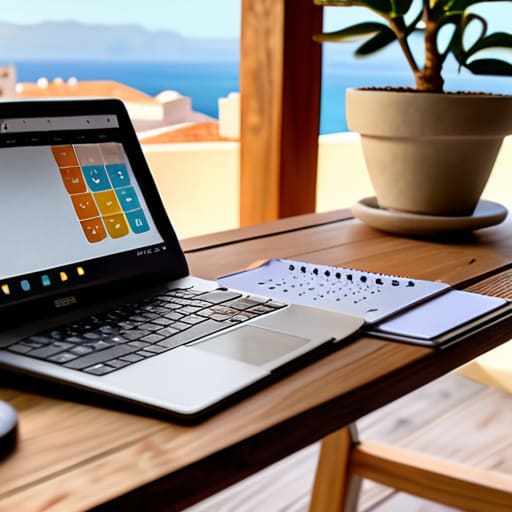
Stop hunting for the perfect café or the best coworking spaces for travelers until you’ve actually mapped out your day. Most people treat travel like a vacation interrupted by emails, and that’s how you end up failing at both. You need to define your “work blocks” before you ever look for a Wi-Fi password. If your process is to answer emails at 9:00 AM, do not let a local market tour or a delayed train derail that. Without a fixed schedule, you aren’t working remotely; you’re just drifting through tasks while the clock runs out.
I see people spending hours searching for reliable internet for remote workers, only to realize they have no idea what they actually need to accomplish once they sit down. Reliability is a variable you can’t always control, so your routine must be built around buffer zones. If your internet drops or your battery dies, what is your fallback? If you don’t have a written contingency for when the tech fails, your productivity won’t just dip—it will crater. Map the sequence of your output first, then find the infrastructure that supports it.
Five Ways to Stop Your Trip From Becoming a Logistics Nightmare
- Audit your output, not your hours. When you’re moving between cities, you can’t rely on a standard 9-to-5. Define exactly what “done” looks like for the day before you leave the hotel. If you haven’t defined the deliverable, you’ll just spend the day performing “busy work” to feel productive while actually accomplishing nothing.
- Standardize your hardware setup. I don’t care how sleek a new gadget looks; if it requires three different dongles and a proprietary charger, it’s a failure point. Pick one ecosystem, one charging standard, and stick to it. Every extra cable is a potential point of friction in your process.
- Create a “Low-Bandwidth” contingency plan. You will eventually sit in a cafe with a connection that barely crawls. If your entire workflow depends on high-speed cloud syncing, you are broken by design. Keep a local, offline version of your critical tasks ready so a slow router doesn’t stall your entire week.
- Batch your administrative overhead. Don’t try to file expenses, book the next transit, or reply to non-urgent Slack threads in ten-minute increments between meetings. It creates cognitive drag. Set one thirty-minute block in the evening to handle the logistics. Treat it like a scheduled maintenance window.
- Document your “Mobile Office” protocol. If you find a way to make a specific setup work—say, a specific way you organize your screen real estate or manage files on a tablet—write it down. Don’t rely on your memory to recreate a functional environment every time you land in a new time zone. Process wins; intuition fails.
The Bottom Line
Stop chasing the latest SaaS subscription to solve your travel chaos; if your workflow isn’t documented on paper before you leave, you’re just paying for expensive digital clutter.
Prioritize your physical and mental routine over Wi-Fi speeds; a fast connection won’t matter if your process collapses because you haven’t accounted for time zone shifts.
Treat your travel setup like a logistics operation—minimize the variables, standardize your kit, and eliminate any step that doesn’t directly contribute to the output.
Stop Chasing the Perfect Setup

At the end of the day, working while traveling isn’t about finding the ultimate noise-canceling headphones or the fastest Wi-Fi in Lisbon. It’s about the discipline of the process. I’ve seen enough people waste thousands on high-end tech only to realize they have no idea how they actually manage their time when their environment changes. You need a documented routine, a clear understanding of your non-negotiable tasks, and a way to execute them without needing a stable desk. If you haven’t mapped out your workflow on a piece of paper before you even pack your bag, you aren’t traveling to work—you’re just wandering aimlessly with a laptop.
Stop waiting for the perfect conditions to arrive. They won’t. There will always be a delayed flight, a spotty connection, or a loud cafe that disrupts your rhythm. The goal isn’t to eliminate the friction; it’s to build a system that is resilient enough to function despite it. Once you stop relying on the tools to do the heavy lifting and start relying on your own defined processes, the world becomes a lot more manageable. Get your workflow right, and the location becomes secondary.

