I spent forty-five minutes last Tuesday watching a mid-sized logistics manager try to configure a “wellness” app to manage his notifications. He was spending hundreds of dollars on software to solve a problem that was actually just a lack of discipline. People keep looking for a digital magic wand for how to separate work and home, but you can’t automate a boundary you haven’t actually defined. If your process for ending the day is just “closing the laptop and hoping for the best,” you aren’t managing your time; you’re just waiting to fail.
I’m not here to sell you a subscription or a mindfulness retreat. I’m going to show you how to treat your personal life with the same operational rigor you apply to a supply chain. We are going to strip away the fluff and focus on mapping the actual transition points in your day. By the end of this, you won’t have a new app to manage, but you will have a documented process that ensures when you step off the bike and into your living room, your brain actually stays there.
Table of Contents
Why Work Life Integration vs Separation Is a Process Problem

Most managers treat the debate of work-life integration vs separation like a philosophical debate. They think it’s about mindset or “finding balance.” It isn’t. It’s a failure of operational design. When you work from home, the physical and temporal boundaries that used to exist by default—the commute, the office door, the desk—have vanished. You haven’t replaced them with a new system; you’ve just replaced them with a laptop on your kitchen table. If you haven’t mapped out exactly when the “work” state ends and the “home” state begins, you aren’t integrating; you’re just leaking productivity into your personal life until you’re hollowed out.
The problem is that people try to solve this with digital detox strategies or by deleting Slack from their phones. Those are band-aids. You can’t patch a hole in a broken pipe with a sticker. If your process doesn’t include a formal end-of-day shutdown ritual, your brain stays in a state of high-frequency idling. You need a repeatable, documented sequence—closing the tabs, clearing the desk, physically leaving the room—to signal the transition. Without a defined process, you aren’t managing your time; you’re just reacting to notifications.
Establishing Physical Work Zones Before You Buy New Gear

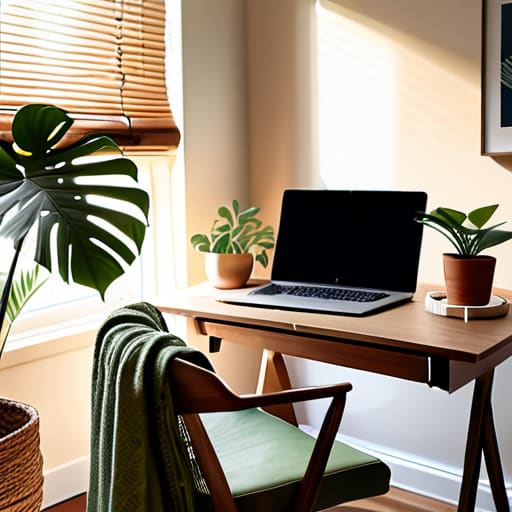
Stop looking for a new ergonomic chair or a high-end noise-canceling headset to solve your boundary issues. Most people I consult try to buy their way out of a spatial mess. If your “office” is the same kitchen table where you eat dinner, you haven’t created a workspace; you’ve just turned your dining room into a permanent depot for stress. Establishing physical work zones isn’t about expensive furniture; it’s about geography. You need a dedicated spot that signals to your brain that the shift has started. If you can’t afford a separate room, use a specific chair or even a specific desk lamp that only stays on during billable hours.
Once that zone is defined, you need a way to exit it. You wouldn’t leave a warehouse without locking the gates, so why do you do it to your home office? You need an end-of-day shutdown ritual that is as mechanical as a conveyor belt stopping for maintenance. Close the laptop, clear the desk, and physically move away from that zone. Without this, you aren’t practicing work-life integration; you’re just letting the process leak into your personal time until you hit a wall.
Stop Buying Software and Start Defining Your Shutdown Sequence
- Define a hard “digital sunset.” If your work email lives on your personal phone, you haven’t separated work and home; you’ve just invited a micromanager into your pocket. Move the work accounts to a dedicated device or use strict profile scheduling.
- Map your transition ritual. I don’t care if it’s a twenty-minute cycle or just closing a specific laptop lid. You need a physical, repeatable action that signals to your brain the “Operations” phase of the day is closed and the “Human” phase has begun.
- Audit your notification settings like a cost-benefit analysis. Every ping is a leak in your productivity and a breach of your personal time. If a notification doesn’t require an immediate, mission-critical response, it shouldn’t be allowed to interrupt your dinner.
- Write down your “End of Day” checklist. Most people carry work home because they’re afraid they’ll forget something. Write the status of your current tasks on a physical notepad before you stand up. Once it’s on paper, it’s out of your head.
- Stop treating “availability” as a metric of success. Being reachable at 9:00 PM doesn’t make you a high performer; it makes you a bottleneck with poor process control. Set clear communication windows and stick to them.
The Bottom Line

Stop buying “productivity” gadgets to solve a boundary problem; if you haven’t defined the physical and temporal end of your workday, a new monitor won’t help.
Treat your transition from work to home as a formal handoff in a process; without a clear shutdown ritual, you’re just running a continuous loop that leads to burnout.
Document your availability. If your “process” allows clients or bosses to ping you at 8 PM, no amount of software settings will fix the lack of a defined operational window.
The Bottom Line
You don’t need a subscription to a meditation app or a $3,000 ergonomic setup to fix your work-life bleed. We have covered the essentials: you must define the process of “clocking out,” map your physical boundaries, and stop treating your home like a flexible warehouse. If you haven’t explicitly defined when the work day ends and where the work zone stops, you aren’t managing your time—you’re just letting it leak into your dinner. Tools are secondary; process is everything.
Stop waiting for a software update to give you your evenings back. Efficiency isn’t about doing more in less time; it’s about knowing exactly when to stop doing anything at all. Go outside, ride a bike, or sit in a room where no one can ask you about a spreadsheet. Build the discipline to close the door, shut the laptop, and respect the boundaries you’ve drawn. The process is yours to command, or you’ll spend the rest of your life working for a ghost in your own living room.

