
I spent forty-five minutes yesterday watching a mid-sized logistics manager try to “optimize” his team’s output using a $50-a-month digital whiteboard tool. He was frantically dragging colorful sticky notes across a screen, convinced that learning how to run a retrospective via a fancy UI would magically fix his department’s communication breakdown. It was a waste of time and a waste of money. Most people treat these meetings like a ritual to appease management rather than a way to actually fix things. If you haven’t even bothered to write down your current workflow on a piece of scrap paper, no amount of software or “agile facilitation” is going to save you from your own inefficiency.
I’m not here to sell you on a new methodology or a subscription to some slick project management app. I’m going to show you how to strip the nonsense away and focus on the only thing that matters: the process. I will give you a direct, blunt framework for how to run a retrospective that actually identifies waste and forces accountability. We aren’t looking for “vibes” or team bonding; we are looking for measurable improvements to the way you work.
Table of Contents
Building a Continuous Improvement Process From Scratch
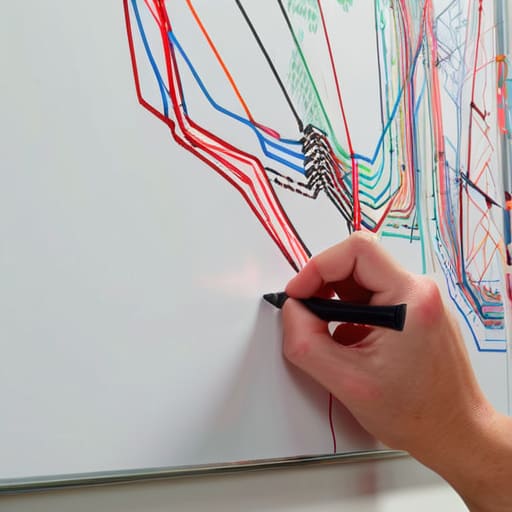
You don’t build a continuous improvement process by downloading a template or buying a subscription to a new project management tool. You build it by mapping out exactly how work flows through your department—and where it gets stuck. Most managers try to jump straight into agile retrospective techniques without first defining the baseline. If you don’t know what your current state looks like on paper, you have no way of measuring if your “improvements” are actually moving the needle or just creating more busywork.
Start by documenting the current sequence of events, the hand-offs, and the friction points. Once you have a baseline, you can implement a structured continuous improvement process that relies on data rather than feelings. This requires more than just a casual chat; it requires a formal way to capture what went wrong and, more importantly, a rigorous system for action item tracking. If a fix isn’t assigned to a specific person with a hard deadline, it isn’t a process improvement; it’s just a complaint session. Stop treating your meetings like therapy and start treating them like an audit of your operational reality.
Why Agile Retrospective Techniques Fail Without a Blueprint

Most managers treat agile retrospective techniques like a magic pill. They think if they just pick the right format—Start/Stop/Continue or the Sailboat—the friction in their department will magically evaporate. It won’t. I’ve sat through countless sessions where teams use fancy digital whiteboards to shout about “communication gaps,” only to return to the exact same chaos forty-eight hours later. The problem isn’t the technique; it’s that you’re trying to optimize a ghost. Without a documented baseline of how work actually flows, your “improvements” are just unsubstantiated opinions floating in a vacuum.
When you lack a blueprint, you lose the ability to measure anything. You might achieve a momentary burst of team psychological safety by letting everyone vent, but venting isn’t operational excellence. Without a written process to reference, your retrospective meeting agenda becomes a circular venting session rather than a diagnostic tool. You end up with a list of vague promises instead of rigorous action item tracking. If you can’t point to a specific step in your written workflow and say, “This is where the bottleneck lives,” then you aren’t running a retrospective—you’re just having an expensive, unstructured chat.
Five Ways to Stop Wasting Time in Your Retrospectives
- Stop using digital whiteboards as a crutch. If you can’t map your workflow on a physical wall or a plain piece of paper, a $20-a-month subscription to a collaborative tool isn’t going to reveal your bottlenecks. It’ll just make them more colorful.
- Ban “vague feelings” from the room. “I feel like communication is bad” is a useless sentence. I want to hear: “The handoff from logistics to dispatch takes forty minutes longer than the documented standard.” Give me data, not vibes.
- Assign a single owner to every action item. A retrospective without a named person and a hard deadline is just a high-priced social hour. If no one is accountable, the process remains broken, and you’ve just wasted sixty minutes of billable time.
- Check the process against the manual. During the session, don’t just talk about what happened; compare what happened to what you actually wrote down in your SOPs. If the reality doesn’t match the document, the document is your first problem.
- Limit the scope. Most teams try to fix the entire company in one hour. You can’t. Pick one specific friction point in the workflow, solve it, and document the change. Anything else is just noise.
The Bottom Line
Stop buying software to mask chaos; if you can’t map your current workflow on a piece of paper, no digital retrospective tool is going to save your margins.
A retrospective isn’t a therapy session for team feelings; it is a diagnostic tool meant to identify specific deviations from your documented process.
If you don’t turn the meeting’s outcomes into written, repeatable procedural changes, you aren’t improving—you’re just wasting billable hours.
Stop Buying Software and Start Writing Processes
You can run all the “Start-Stop-Continue” sessions you want, but if you haven’t mapped the actual workflow, you’re just rearranging deck chairs on a sinking ship. A retrospective isn’t a magic wand; it’s a diagnostic tool. To make it work, you need a baseline—a documented, boring, unglamorous process that you can actually measure against. Without that blueprint, your team is just venting about frustrations without any way to track if the changes actually stick. Stop chasing the latest productivity app and start documenting the reality of your operations.
Efficiency isn’t about how many colorful sticky notes you put on a digital whiteboard. It’s about the discipline to look at a broken process, write it down, and have the guts to fix it. If your retrospective doesn’t result in a tangible update to your standard operating procedures, you haven’t had a meeting; you’ve had a waste of time. Get your processes on paper, run your reviews, and stop expecting software to do the heavy lifting for you. The process is the solution.

